Garage Door Frozen to the Ground After an Ice Storm? What to Do (and Not Do)
September 30, 2026
QUICK ANSWER: A garage door frozen to the ground after an ice storm almost always means freezing rain has bonded the rubber bottom seal to the concrete slab in a solid sheet, not that the opener or springs have failed. The National Weather Service classifies an ice storm as an event that leaves at least a quarter inch of ice on exposed surfaces, and that much glaze is more than enough to seal a weatherstrip to concrete overnight. Don't run the opener repeatedly or pull the manual release cord to force the door up by hand; both actions can strain the motor, tear the seal, or let an unbalanced door drop without warning. Clear the visible ice by hand first, apply warm, not boiling, water or low indirect heat along the seal line, then test the door gently before trying the opener again. If it still won't move after a careful thaw, or if you hear grinding or see a bent track, stop and call a technician instead of working the door any further.
The freezing rain started sometime after midnight and never let up. By the time you're dressed and ready to back out for work, the driveway, the porch railing, the mailbox, and the bottom few inches of the garage door are all coated in the same glassy sheet. You hit the opener button from inside the car, expecting the usual hum and lift. Instead the motor strains, the door doesn't move, and something along the bottom edge lets out a dull crack before the opener gives up and reverses.
That sound is the door telling you it's frozen solid to the slab underneath it, and it's a different situation than the stiff hinges and sluggish springs that show up during an ordinary cold snap. A true ice storm coats every exposed surface in a continuous layer of ice, and the narrow seam where the door meets the concrete is exactly the kind of gap that layer locks onto hardest.
Here's what's actually happening underneath that ice, what's safe to try on your own, and what to leave alone until a technician can look at it.
Why an Ice Storm Freezes a Door Differently Than a Cold Snap
A routine Western New York freeze usually traps a door with meltwater. Snow packed against the bottom seal thaws a little during the day, and when the temperature drops after dark, that puddle refreezes and glues the weatherstrip to the concrete. It's annoying, but it's usually a thin, localized skin of ice right along the seal.
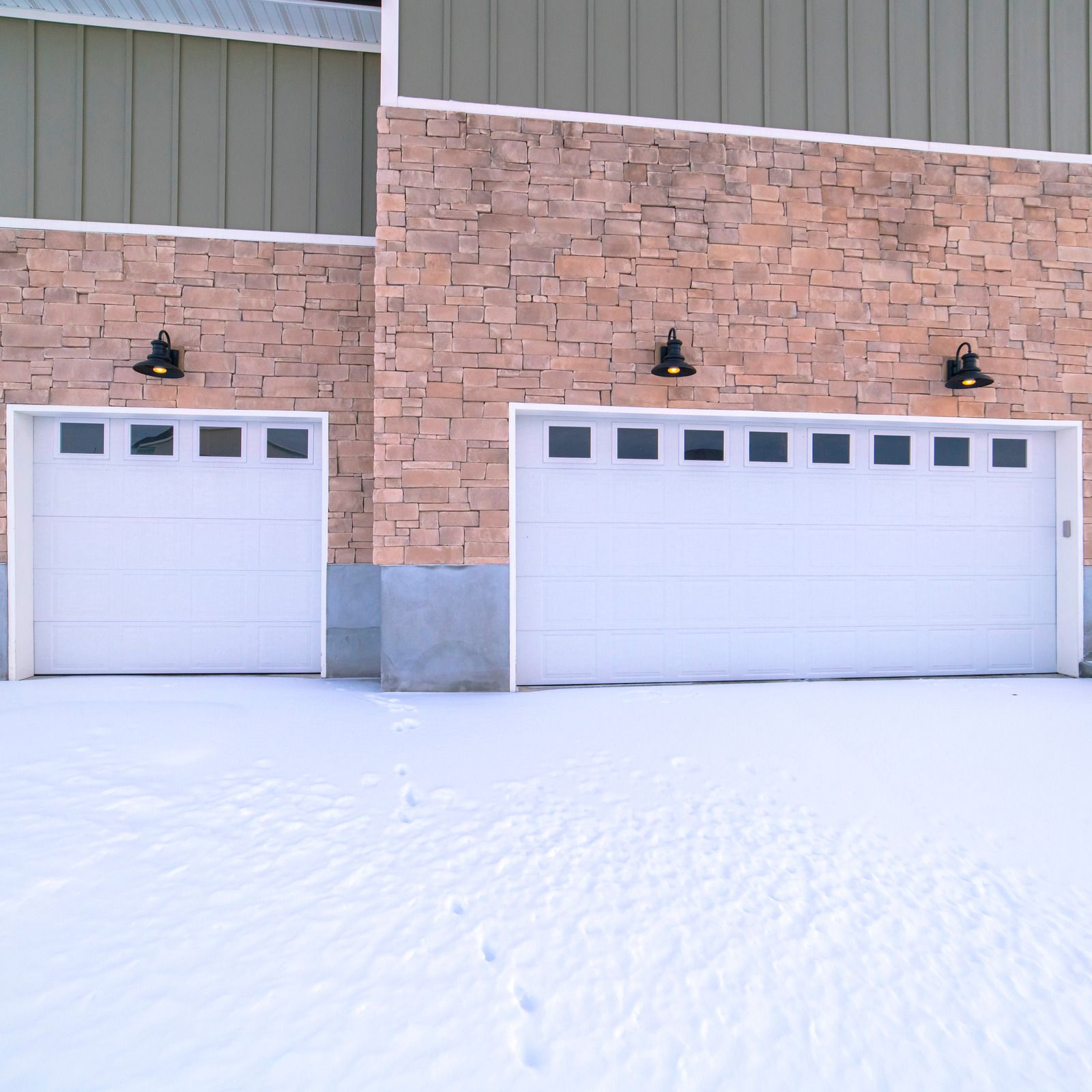
An ice storm works differently because the precipitation itself is liquid the entire way down. Rain falls through a layer of air that's below freezing near the ground, and it freezes on contact with anything colder than 32 degrees, including your driveway, your door, and the apron of concrete right in front of it. The National Weather Service defines an ice storm specifically as freezing rain producing at least a quarter inch of ice accretion on exposed surfaces, and the Midwestern Regional Climate Center notes that once accumulation reaches half an inch or more, the effects become widespread rather than isolated. A quarter inch of solid ice bonding a rubber seal to a concrete slab is a far stronger grip than the thin refreeze from melted snow, which is why a door that shrugged off an ordinary cold morning can come to a dead stop after freezing rain moves through.
The ice doesn't stop at the seal. In a real ice storm, the glaze often extends up the face of the lower panel and across the track rails at the bottom of the door, not just the strip where the weatherstrip meets the ground. That's worth knowing before you assume the fix is as simple as chipping one narrow line of ice away.
What to Do When You Find the Door Frozen Shut
Start outside, not at the opener button. Walk around the exterior of the door and look at how far the ice actually extends. If it's limited to the seal line, you're dealing with a simple thaw. If ice has built up across the panel face, inside the bottom track, or around any exposed hardware, move more carefully and expect the process to take longer.
Chip The Visible Ice By Hand
Use a plastic ice scraper or putty knife rather than metal tools, working along the seal's outside edge. Loosen the ice carefully without prying beneath the rubber, which can tear easily when stiff from freezing temperatures and repeated exposure.
Warm The Seal Line Instead Of Attacking It
Use a hair dryer or low-setting heat gun several inches away, keeping it moving to soften ice. Warm tap water can help when poured slowly. Avoid boiling water because rapid temperature changes can damage concrete and cause refreezing.
Test The Door By Hand Before Using The Opener
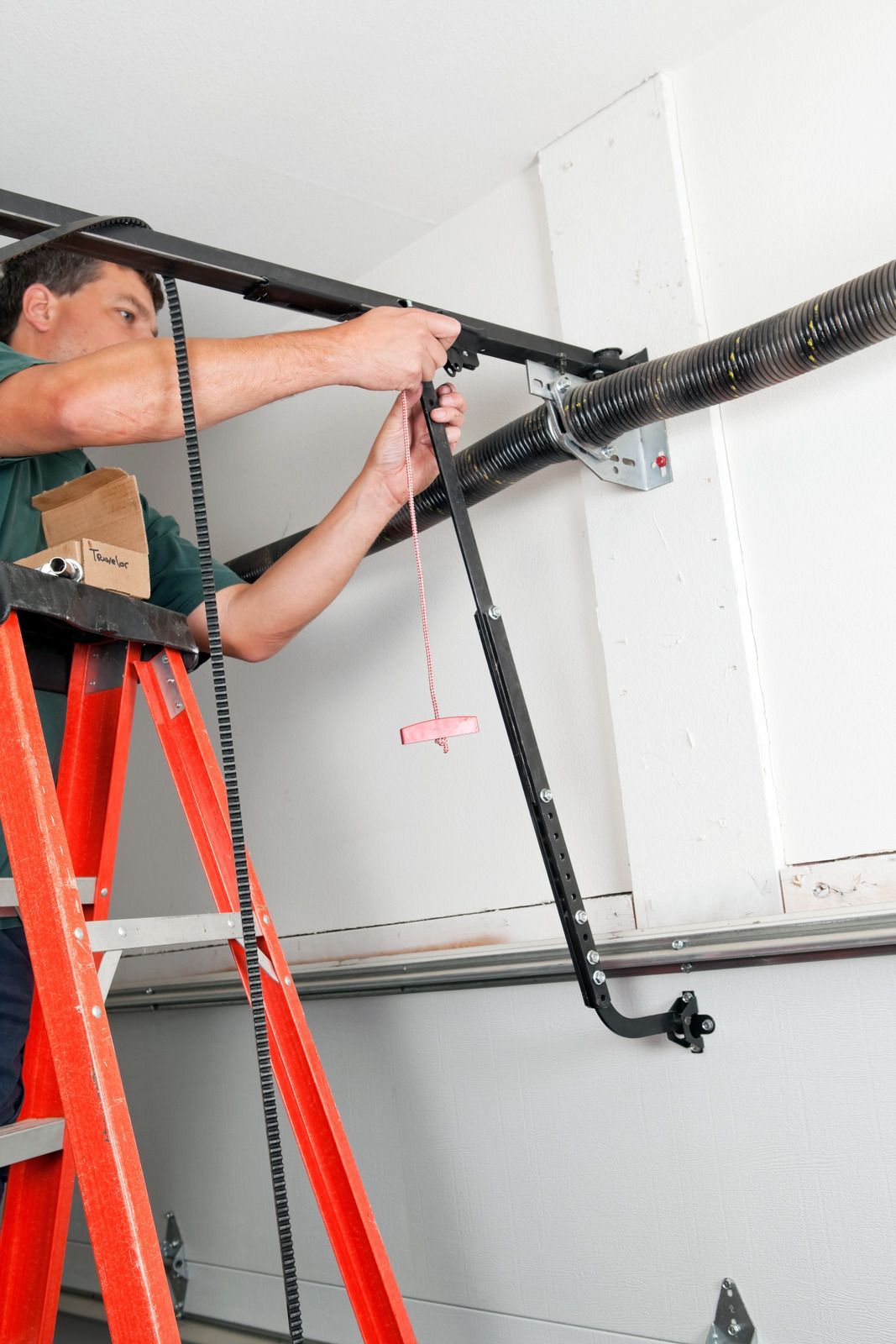
After clearing softened ice, keep the door closed and disengage the opener using the emergency release cord. Lift with the door handle, not the cord. If resistance or catching occurs, stop immediately to avoid damaging springs, seals, or hardware.
TIP: Keep a bag of sand or non-clumping kitty litter in the garage during ice storm season. Scattering a light layer across the concrete directly in front of the door, before you even try to move it, gives you traction while you work and keeps you from slipping on the same ice that trapped the door.
The whole process usually takes ten or fifteen minutes of patient, low-heat work. It's slower than yanking the door open, but it's the difference between a stuck door and a torn seal, a stripped opener, or a strained back.
What Not to Do
Once the ice is holding a door shut, the instinct is to push harder, and that instinct causes most of the damage that follows an ice storm.
Don't run the opener repeatedly hoping it breaks through. Openers sense resistance and reverse for safety, working exactly as intended against frozen ice. Overriding that reversal asks the motor to fight a bond it wasn't built for, a common way to burn out a motor or strip a drive gear.
Don't pull the manual release cord to force a frozen door by hand. Chamberlain Group's own guidance is direct: the release should only be used when the door is fully closed, never to raise or lower it. A door gripped unevenly by ice can bind, and an uneven pull can let it drop without the motor controlling it.
Don't chip at the ice with a metal tool pressed against the weatherstrip or panel. It's easy to gouge the rubber seal or dent steel while working quickly in the cold, and a torn seal lets cold air, meltwater, and road salt into the garage for the rest of the season.
WARNING: Never force a motorized garage door against resistance you can't identify, and never work underneath or beside a door that's partially open and straining against ice you haven't fully cleared. A door under uneven load from ice or a compromised spring can shift or drop suddenly, and there's no safe way to predict exactly when that will happen. If the door won't move freely after a careful thaw, leave it and call a technician rather than continuing to force it.
When the Ice Storm Also Takes Out the Power
Ice storms don't only freeze doors, they take down power lines too. The National Weather Service notes heavy ice can topple poles and snap limbs onto lines, and repairs after a storm can take days. Resist heading outside for both.
Check for downed lines before doing anything near the garage. The Electrical Safety Foundation International advises staying at least ten feet back from any downed line, since it can carry lethal current even while lying still and appearing dead.
With the power out, the opener won't run, removing the temptation to force it electrically. What's left is the same careful, by-hand thaw process, minus testing the door afterward. Run a full cycle once power returns before relying on it.
Why the Extra Weight Matters, Not Just the Grip
It's tempting to think of a frozen door as purely a traction problem, but a heavy ice coating adds real weight to a system balanced within a narrow margin. Springs are sized to counterbalance a door's specific weight, and DASMA warns spring adjustments should only be handled by a trained technician.
A layer of ice across the bottom panel and lower track adds weight the spring wasn't sized to carry. That's part of why doors sometimes move unevenly or feel heavier after a storm, even once the visible ice is gone. If lifting feels noticeably harder afterward, that's worth having checked rather than pushed through.
Preventing the Next Ice Storm From Locking You Out
A little preparation before the next freezing rain event goes a long way toward avoiding a repeat of this morning. Treat the concrete directly under the door with a light coat of silicone spray on the weatherstrip itself, which helps keep ice from bonding as tightly to the rubber. Keep the area in front of the door clear of standing water and packed snow whenever possible, since a dry seal has far less for freezing rain to grip onto. A yearly check of the door's balance and hardware before winter sets in also catches a weak spring or worn seal before an ice storm turns a minor issue into a stuck door on a work morning.
Frequently Asked Questions
Is it safe to pour hot water on a garage door that's frozen to the ground?
Warm water is fine, but avoid water that's near boiling. The rapid temperature swing can crack or pit the concrete, and any water left behind can refreeze fast within minutes into an even thicker layer.
Can I use my opener's force setting to push through the ice instead of chipping it away?
No. The opener reverses when it senses resistance, a safety feature. Overriding that setting to push through ice strains the motor and components, and you can't control how the door moves once it breaks free.
How long does it usually take to thaw a garage door frozen shut after an ice storm?
Working carefully with a hair dryer, heat gun, or warm water, most doors free up within ten to twenty minutes. Ice built up across the panel face or bottom track takes longer and needs patience.
My door came free but now it feels heavier and sounds different than before. Is that normal?
Not necessarily, but it's worth checking. A change in weight or sound after thawing can point to a torn seal, shifted hardware, or a spring under new strain from the ice. Have a technician check.
Should I worry about the garage door if the ice storm knocks out my power too?
Yes, but not because of the door. Check for downed power lines before going outside, and stay well clear of any you find. Once power is safely restored, run the door through a full cycle.
What's the single biggest mistake people make with a garage door frozen to the ground?
Repeatedly hitting the opener button or pulling the emergency release to force the door open. Both strain parts that were fine before the storm, turning an ice problem into a torn seal or opener repair.
Patience Now Prevents the Next Ice Storm's Damage
A garage door frozen to the ground after an ice storm is rarely a mechanical failure. It is a physics problem, freezing rain bonding rubber to concrete in a way ordinary cold rarely manages. The damage that actually happens, torn seals, burned out motors, bent tracks, comes from forcing a door that just needs time and warmth. Working the ice loose with a scraper, warm water, and a careful hand test solves what force alone never will.
Abbott Door
has worked through 50
years of West Seneca, NY winters, and every ice storm leaves the same lesson behind: slow down before you push. A door that finally comes free but still feels heavier, sounds different, or catches partway deserves a second look rather than a guess. Getting ahead of that small hesitation now is what keeps the next freezing rain event from turning into a bigger repair down the road.