Garage Door Won't Open in a Cold Snap? Why Freezing Temps Stop It
July 9, 2026
Opener Damage From Attempted Use
Most people will try to use the opener at least once after a spring breaks, often because they did not realize the spring had gone and simply hit the wall button. That single activation under full load puts enormous stress on the opener's drive system. Repeat attempts accelerate the damage. A chain drive or belt drive system that operates without spring counterbalance can strip gears, snap the drive belt, or burn out the motor's capacitor within just a few cycles.
A garage door with a failed spring can come down without warning, particularly if someone attempts to operate it. The sensors on the bottom of the door detect objects in the path during automated operation, but those sensors do not engage the same way during a manual fall. A door dropping from an unsecured position can cause crushing injuries and in severe cases has caused fatalities. This is not a risk worth taking to save a few days of inconvenience.
Common Misconceptions About Spring Repairs
Quick Answer: When a garage door won't open in a hard freeze, the usual culprits are a rubber bottom seal frozen to the concrete, thickened or hardened lubricant gumming up the rollers and hinges, metal parts that have contracted and stiffened, an opener reading the extra resistance and reversing, or a spring that has weakened and snapped in the cold. A few of these you can safely check yourself. Others, especially anything involving the springs or cables, are high-tension repairs that belong to a trained technician.
You back out of the house on a brutal Buffalo morning, hit the remote, and nothing happens. The motor hums, the door strains, then it stops halfway and slides back down. Or it does not move at all. Meanwhile the car is running, you are already late, and the wind coming off the lake is not making the wait any warmer. If this only happens when the temperature drops, that is a real clue, not a coincidence.
A garage door that quits during a cold snap is one of the most common winter calls in Western New York, and it is rarely random. Freezing temperatures, wet snow, road salt, and ice all work on the same set of moving parts at once. Some of what stops the door is minor and easy to spot. Some of it is a warning that a component is close to failing. Knowing the difference keeps you from forcing a door that should be left alone. Here is what is actually happening when the cold locks up your door, and where the line sits between a safe check and a job for a pro.
Why Cold Weather Alone Can Stop the Door
A garage door is a balanced mechanical system, and cold weather pushes on nearly every part of it. When you understand what the freeze does to each piece, the halfway stall or the dead-still door starts to make sense.
Metal contracts and stiffens
Steel springs, tracks, hinges, and rollers all shrink slightly and lose flexibility as the temperature falls. That added stiffness creates resistance the system did not have in October, and a door that opened smoothly all fall suddenly drags. Industry service pros point to contracting metal components as one of the first things cold weather does to a door.
Lubricant thickens or freezes
The grease and oil on the rollers, hinges, and tracks are only rated to stay fluid down to a point. In a deep freeze they harden and get sticky, so the parts that should glide instead grab. This is one of the single most common reasons a door gets stuck partway up the track in winter, and using the wrong product, like a light oil or WD-40, makes it worse because those gum up in the cold rather than protecting the metal.
The bottom seal freezes to the ground
When the rubber weatherstrip at the base of the door sits in melting snow or a puddle and the temperature drops overnight, that water freezes and glues the seal to the concrete. In the morning the door feels like it is bolted down. Force it, and you can tear the weatherseal right off, which then lets snow, water, and cold air pour into the garage all season.
Frost and ice confuse the opener
Snow packed in the tracks or ice built up at the base adds resistance the opener was never set to fight through. Modern openers are designed to sense how much force a movement should take, so when the door suddenly feels heavier, the opener reads that as an obstruction and reverses on purpose. It is a safety feature doing its job, not a broken motor.
What You Can Safely Check Yourself
Plenty of cold-weather stalls come down to friction and ice, and there is a short list of things a homeowner can reasonably look at before calling anyone.
Clear the ice at the base
If the door is frozen to the concrete, do not yank it. Chip gently at the ice or pour warm, never boiling, water along the bottom seal to melt it loose, then lift the door and dry and clear the area so it does not refreeze. Boiling water can crack cold materials, and prying can rip the seal.
Look for snow and ice in the tracks
Packed snow or an ice ridge inside the track will stop a door cold. Brushing the tracks clear and knocking loose any buildup often gets a door moving again on its own.
Check the manual lift
With the opener disconnected and the door down, lift by hand. A smooth, balanced lift points you toward lubricant or ice as the cause. A heavy or jammed lift points you toward the springs, which is your signal to stop.
Replace weak remote batteries
Cold drains batteries faster, and alkaline cells lose voltage quickly in the freeze. If the wall button works but the remote does not, a fresh battery, ideally a lithium one that handles cold better, may be all it takes.
Reconnect and retest the opener
Once the ice and snow are cleared and you have confirmed the door lifts freely by hand, reconnect the opener and try again. If the door now runs, the cold-related obstruction was the whole story.
If you have cleared the ice, confirmed the door lifts smoothly by hand, and it still will not run, the cause has moved past what a homeowner should chase, and that is the right moment to bring in a technician rather than keep forcing the opener.
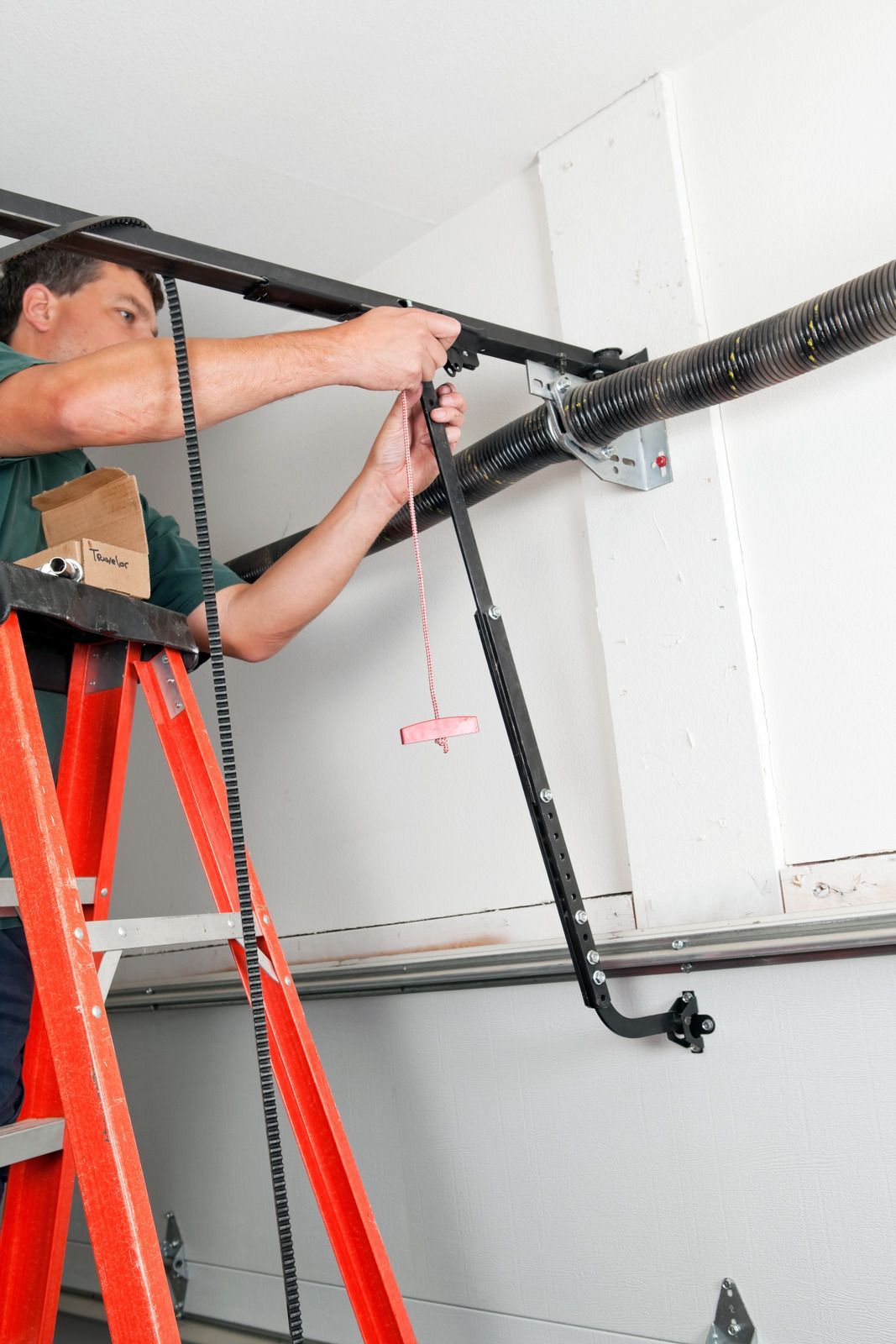
Warning: Never try to adjust, unwind, or replace garage door springs or cables yourself, and never crank the opener's force setting up to muscle the door past resistance. Torsion springs and lift cables hold tremendous stored tension, and a slip can cause severe injury in an instant. This is true year-round and doubly so in a cold snap, when metal is brittle and a weakened spring is already on the edge. If the door feels heavy, will not lift by hand, has a visible gap in the spring coil, or shows a frayed or loose cable, leave it closed and have a trained technician handle the tension safely.
How a Pro Diagnoses a Cold-Stuck Door
Because so many different faults produce the same frozen-door symptom, sorting it out takes hands-on inspection rather than guesswork. A technician checks whether the door balances properly on its springs, tests the actual lifting force the door requires, inspects the rollers, hinges, and tracks for wear and corrosion, looks over the springs and cables for fatigue or damage, and confirms the opener's force and safety settings are correct rather than cranked up to compensate for a mechanical problem.
What you end up with is the real reason the door stopped, whether it is hardened lubricant that needs cleaning and re-greasing with a cold-rated product, a frozen seal that needs the drainage around it addressed, worn rollers dragging in the track, or a spring or cable at the end of its life that needs safe replacement. That is a far better outcome than a winter of fighting the opener and hoping the door cooperates.
Frequently Asked Questions
Why does my garage door only stick when it is freezing outside?
Freezing temperatures cause metal components to contract, lubricants to thicken, and moisture beneath the door to freeze. Together, these conditions increase resistance, making garage doors drag, stick, or stall despite operating normally during warmer weather.
Is it safe to pour hot water to free a door frozen to the ground?
Use warm water instead of boiling water to loosen a frozen garage door safely. Boiling water may damage materials and refreeze quickly. Dry the area afterward to reduce ice buildup and prevent repeated freezing problems.
My door starts to open then reverses in the cold. What is happening?
Your garage door opener reverses because its safety system detects excessive resistance. Ice, thick lubricants, or stiff components increase operating force, causing reversal. Avoid increasing force settings, since doing so may create unnecessary safety risks.
The door suddenly feels really heavy and will not lift. Is that the cold?
A garage door that suddenly feels extremely heavy often indicates a broken spring rather than cold weather alone. Because springs remain under dangerous tension, avoid operating the door and arrange professional repairs as soon as possible.
Can I just spray WD-40 on everything to fix the sticking?
No. WD-40 is not designed as a long-term garage door lubricant. Instead, use silicone-based or lithium-based lubricants formulated for cold temperatures after cleaning components to reduce sticking, improve operation, and prevent unnecessary wear throughout winter.
How can I keep this from happening again next winter?
Prevent winter garage door problems by clearing snow and ice, eliminating standing water, lubricating moving parts with cold-rated products, and scheduling seasonal maintenance. Regular inspections identify worn springs, rollers, and cables before freezing temperatures cause failures.
Getting the Door Moving Again Without Making It Worse
A garage door that quits in a cold snap is usually trying to tell you something specific. A frozen seal, thickened grease, or snow in the track is a nuisance you can often clear safely. A door that reverses under strain or suddenly feels too heavy to lift is a warning that a part is fighting the cold and losing. The key is not forcing it. Clear the ice, test the manual lift, and if the door still will not run or feels heavy, stop before a stiff morning turns into a broken spring or a torn seal. In Western New York, where the freeze-thaw grind and road salt work on your door all winter, catching the difference early is what keeps a cold morning from becoming an expensive one.
Schedule a winter garage door inspection — When your door stalls, reverses, or feels too heavy during a freeze, the safe move is a hands-on diagnosis, not another attempt with the opener. With 50
years of experience, Abbott Door
understands how lake-effect cold, ice, and road salt affect
garage door
springs, cables, rollers, and seals. Proudly serving West Seneca, New York, and the surrounding area, we test your door's balance, safely inspect high-tension components, and service the hardware with cold-weather-rated care to keep it operating reliably all winter. Book a seasonal inspection before the next hard freeze leaves your car stuck in the garage.