What Happens to Your Garage Door When a Spring Goes and Why You Cannot Wait It Out
June 16, 2026
Your garage door weighs anywhere between 150 and 400 pounds, and the only thing keeping that weight from crashing down is a tightly wound spring. Most homeowners never think about garage door springs until one snaps, and when it does, the consequences are immediate and often serious. A broken spring does not just mean an inconvenient morning where you cannot get your car out. It sets off a chain reaction that affects the opener, the cables, the tracks, and the structural balance of the entire door system.
Spring failures are among the most common garage door issues across the country, and they account for a significant portion of emergency service calls. Understanding what actually happens inside your garage door system when a spring breaks, and why letting it sit even for a few days creates compounding problems, is information every homeowner should have before it becomes a crisis. This blog breaks down the mechanics, the risks, and the reasons why a broken spring is never a situation you can afford to delay addressing.
How Garage Door Springs Work
The Two Types of Springs and What They Do
Garage doors operate using one of two spring systems: torsion springs or extension springs.
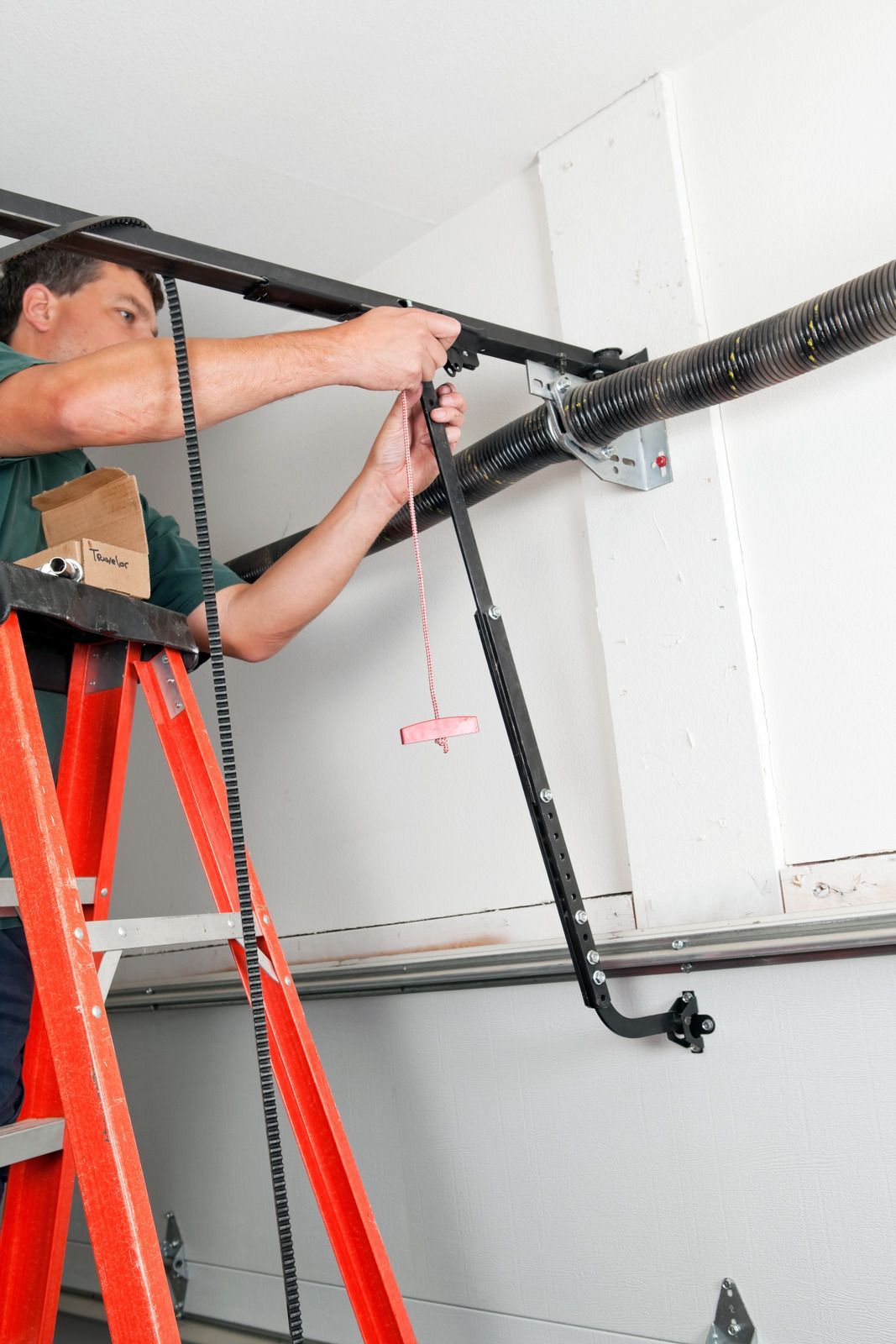
Torsion springs are mounted horizontally above the door opening and work by storing mechanical energy as they wind and unwind. When you close the door, the spring winds up and stores tension. When you open it, that stored energy unwinds and does the heavy lifting.
Extension springs run along the horizontal tracks on either side of the door and stretch to create the counterbalance. They are common in older systems and typically less expensive to install, though they carry their own set of risks when they fail.
Both systems serve the same fundamental purpose: counteracting the door's weight so the opener motor only needs to apply minimal force. Without the spring, the opener is essentially trying to lift several hundred pounds on its own, which it was never designed to do.
Spring Lifespan and Why Failure Is Predictable
Most residential garage door springs are rated for 10,000 cycles. One cycle equals one open and one close. A household that opens and closes their garage door four times a day will go through roughly 1,460 cycles per year, meaning the average spring reaches its rated lifespan in about seven years.
Springs do not always break at the end of their rated cycle count. Temperature swings, lack of lubrication, and manufacturing variances all influence how long a spring actually lasts. Cold climates are particularly hard on springs because metal contracts in low temperatures, making the coils more brittle and prone to snapping.
What Physically Happens When a Spring Breaks
The Immediate Mechanical Failure
When a torsion spring snaps, you will hear a loud bang that many homeowners mistake for an intruder or a car accident. The tension releases all at once, and if the door is in motion, it will drop or stop abruptly depending on whether the opener's safety features engage.
With extension springs, a snap can cause the spring itself to whip through the air if it is not fitted with a safety cable. Uncontained extension springs have caused property damage and serious injuries. This is one reason modern building codes in many states require safety cables to run through the center of extension springs as a containment measure.
The Cascade Effect on Connected Components
A broken spring does not fail in isolation. Here is what happens to the rest of the system almost immediately:
| Component | What Happens After Spring Failure |
|---|---|
| Opener Motor | Overloads trying to move the full door weight unassisted |
| Cables | Become slack or snap under redistributed tension |
| Drums | Can unspool or misalign when cable tension is lost |
| Tracks | Risk bending if the door drops unevenly |
| Door Panels | Can warp or buckle under sudden unbalanced force |
The opener is the component most immediately at risk. Most residential openers are rated to handle around 10 to 20 pounds of resistance, not 150 to 400. Forcing an opener to run without spring assistance will burn out the motor in a matter of uses, turning a spring replacement into a far larger repair.
Why You Cannot Use the Door in the Meantime
Structural Instability Makes the Door a Safety Hazard
A garage door without a functioning spring is physically unstable. The door has no counterbalance, which means gravity is the only force acting on it when it is in any position other than fully closed or fully open. If it is suspended halfway, all of that weight is sitting in an unpredictable state.
Attempting to manually lift a door without spring assistance requires overcoming the full door weight. For a standard steel door, that is roughly 130 to 160 pounds. For heavier insulated doors, it can exceed 200. This is not something most adults can safely manage, and attempting it puts serious strain on the back, shoulders, and hands, with the added risk of the door slipping.
Children, Pets, and the Unplanned Drop
A garage door with a failed spring can come down without warning, particularly if someone attempts to operate it. The sensors on the bottom of the door detect objects in the path during automated operation, but those sensors do not engage the same way during a manual fall. A door dropping from an unsecured position can cause crushing injuries and in severe cases has caused fatalities. This is not a risk worth taking to save a few days of inconvenience.
The Hidden Damage That Builds While You Wait
What Sitting Idle Does to the System
Many homeowners assume that leaving the door in a closed position while they wait to schedule a repair means nothing else can go wrong. This is incorrect for a few reasons.
If the spring snapped while under full tension, that tension has transferred somewhere. Often it transfers to the cables, which are now holding load they were not designed to hold without spring assistance. Over 24 to 72 hours, this uneven tension can cause cables to fray, develop kinks, or unspool from the drum.
Drums are aluminum components and are not built to handle the kind of irregular stress that comes from a failed spring. A drum that shifts or bends during this waiting period may need replacement even though it was in good condition before the spring failed.
Opener Damage From Attempted Use
Most people will try to use the opener at least once after a spring breaks, often because they did not realize the spring had gone and simply hit the wall button. That single activation under full load puts enormous stress on the opener's drive system. Repeat attempts accelerate the damage. A chain drive or belt drive system that operates without spring counterbalance can strip gears, snap the drive belt, or burn out the motor's capacitor within just a few cycles.
Common Misconceptions About Spring Repairs
Misconception 1: You Can Replace Just One Spring on a Two-Spring System
If your door runs on two torsion springs and one breaks, replacing only the broken one is a short-term approach. The intact spring has already gone through the same number of cycles as the failed one. It is operating at the same level of wear and will likely fail within weeks or months. Replacing both at the same time means the system comes back into proper balance and you avoid a second breakdown in the near future.
Misconception 2: This Is a DIY Job
Torsion springs are under extreme tension, measured in hundreds of foot-pounds of torque. Replacing them requires winding bars, the right spring specifications for the door's exact weight and height, and the knowledge to release and re-tension the spring safely. Errors during DIY spring replacement have resulted in broken wrists, facial injuries, and damaged doors. This is a repair that belongs with trained technicians who do it as part of daily professional work.
Misconception 3: If the Door Is Closed, It Is Fine to Leave It
A closed door with a broken spring is not in a stable, safe state. It is in a resting state, and those are not the same thing. Any attempt to open it manually or automatically can result in uncontrolled movement. The door should be treated as out of service until the spring is replaced.
Expert Garage Door Spring Repairs Backed by Decades of Experience
A broken garage door spring is not a minor inconvenience you can work around for a week. It is a mechanical failure that makes the door unsafe to use, puts additional strain on the opener and cables, and can lead to a chain of secondary repairs if left unaddressed. The physics of how a counterbalance system works means that every component depends on the spring doing its job. When that link breaks, the rest of the system absorbs force it was never intended to handle. If your spring has snapped or your door has suddenly become difficult to lift, stopped mid-travel, or produced an unusual bang, treat it as an immediate service need rather than something to schedule around.
At Abbott Door, we have been repairing and replacing garage door springs in West Seneca, New York and the surrounding area for 50 years. We understand how residential spring systems work across every door style and weight class, and we approach every repair with the precision that a load-bearing mechanical system demands. Our technicians carry the correct spring specifications for a wide range of door configurations, so we are not guessing at what your door needs. We work on torsion and extension spring systems, handle full cable inspections as part of every spring job, and make sure the opener is not carrying damage from the failure before we close out the repair. When a spring goes, we make sure everything connected to it comes back right.
Frequently Asked Questions
Can I still use my garage door after a spring breaks?
No. Operating a door with a broken spring puts dangerous stress on the opener, cables, and tracks. The door lacks counterbalance and can drop unexpectedly. It should be treated as fully out of service until a technician completes the repair.
How do I know if my garage door spring is broken?
The most common signs are a loud bang from the garage, a door that will not open even when the opener is running, visible separation in a torsion spring coil, or a door that feels extremely heavy when you attempt to lift it manually.
Do both springs need to be replaced at the same time?
On two-spring systems, yes. Both springs have the same cycle count and wear level. Replacing only the broken spring leaves the second one close to failure, and the imbalance between a new and worn spring can cause uneven door movement.
How long does a spring replacement typically take?
A professional spring replacement on a standard residential door usually takes between 45 minutes and 90 minutes. More complex systems or additional component damage discovered during the repair may extend that time.
What causes garage door springs to break prematurely?
The main factors are lack of lubrication, extreme temperature swings, using the wrong spring specifications for the door's weight, and springs that were already close to their rated cycle limit. Regular annual lubrication and inspections can help extend spring life.